Countertops
CUSTOM EPOXY COUNTERTOPS
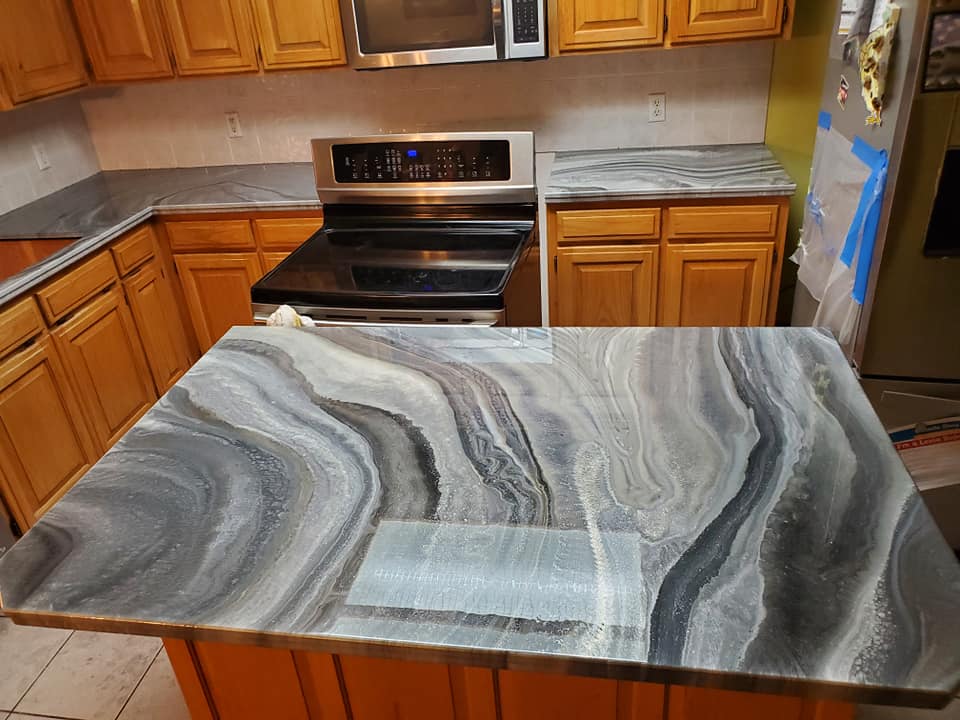
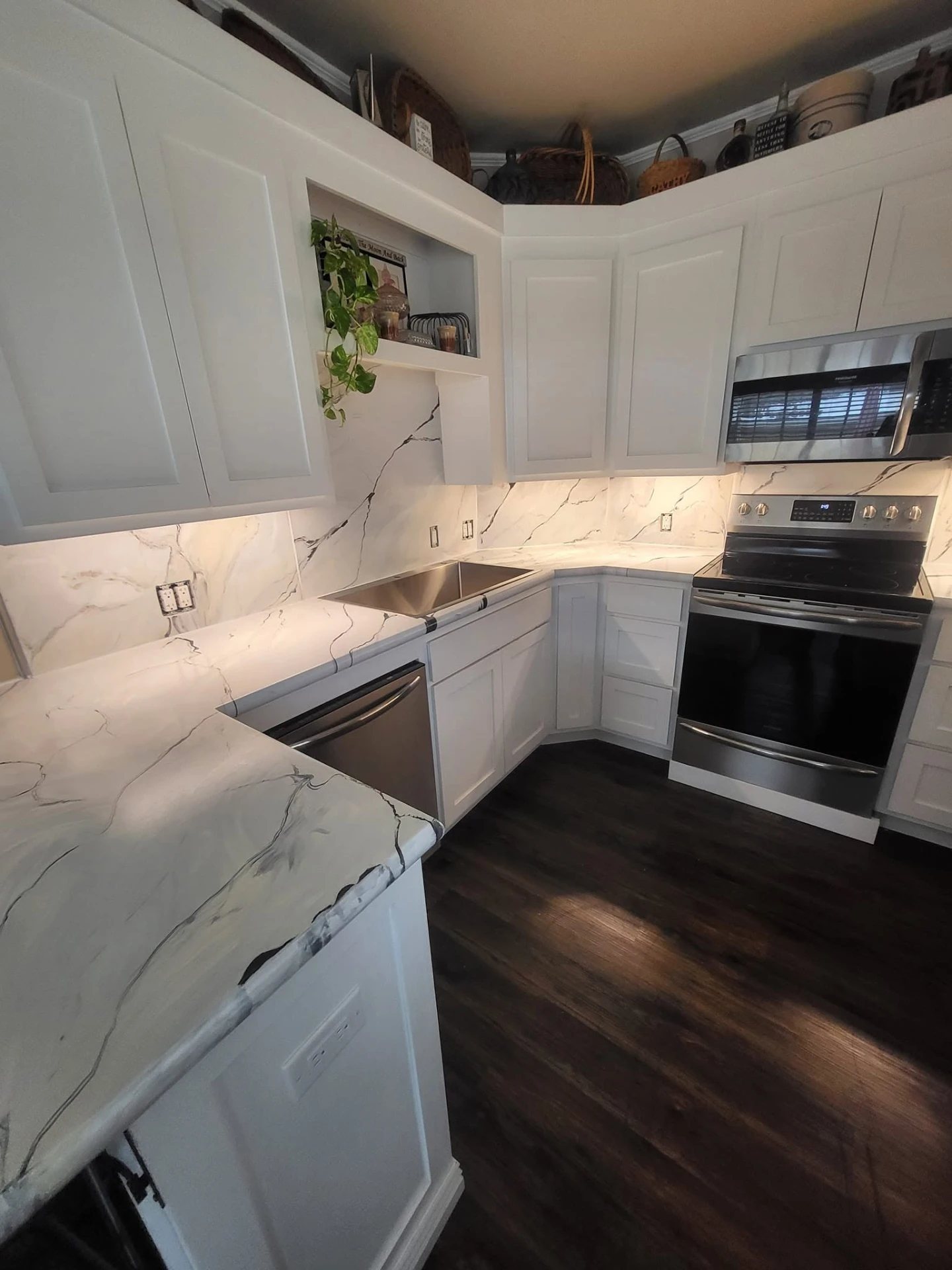
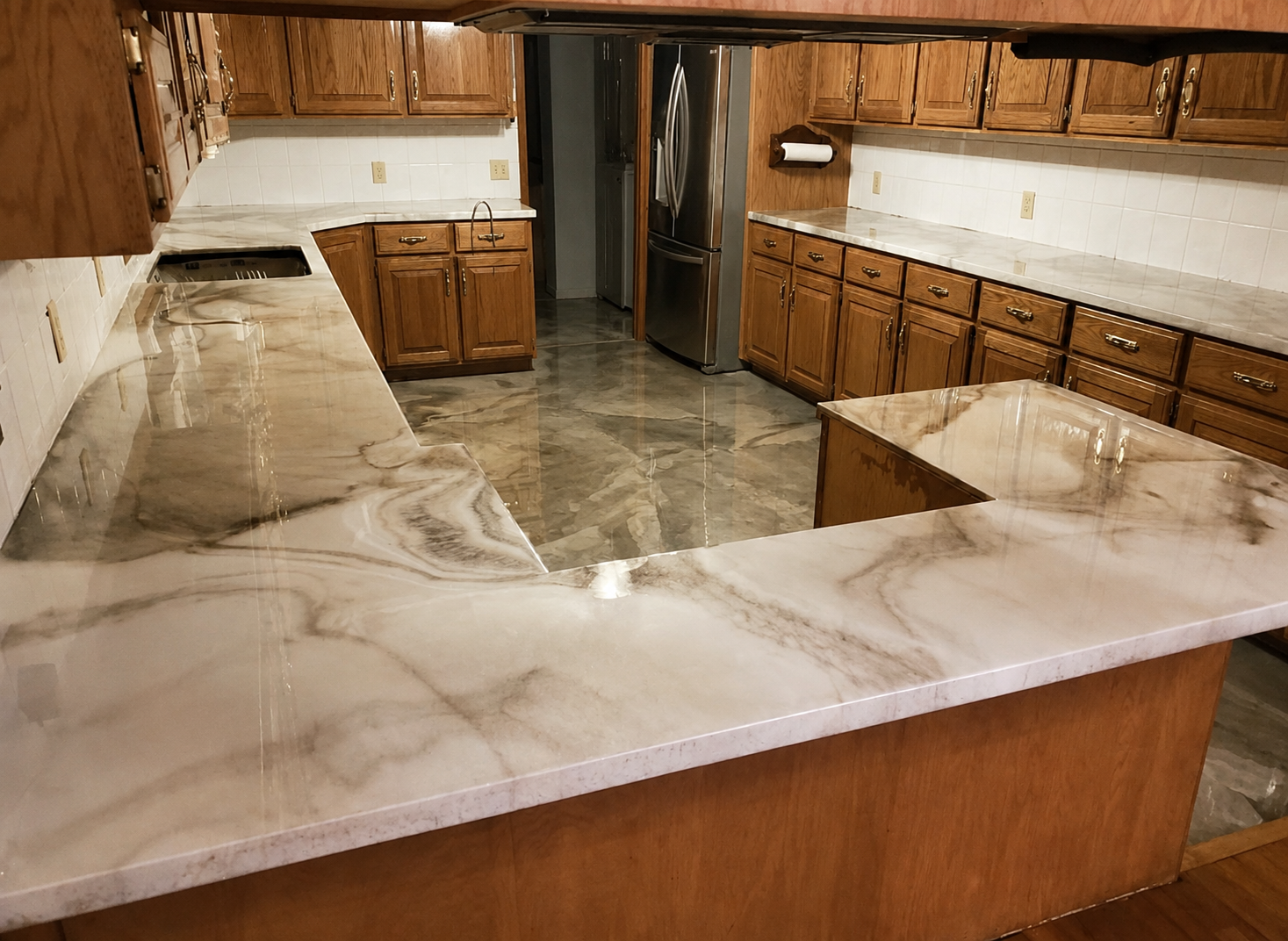
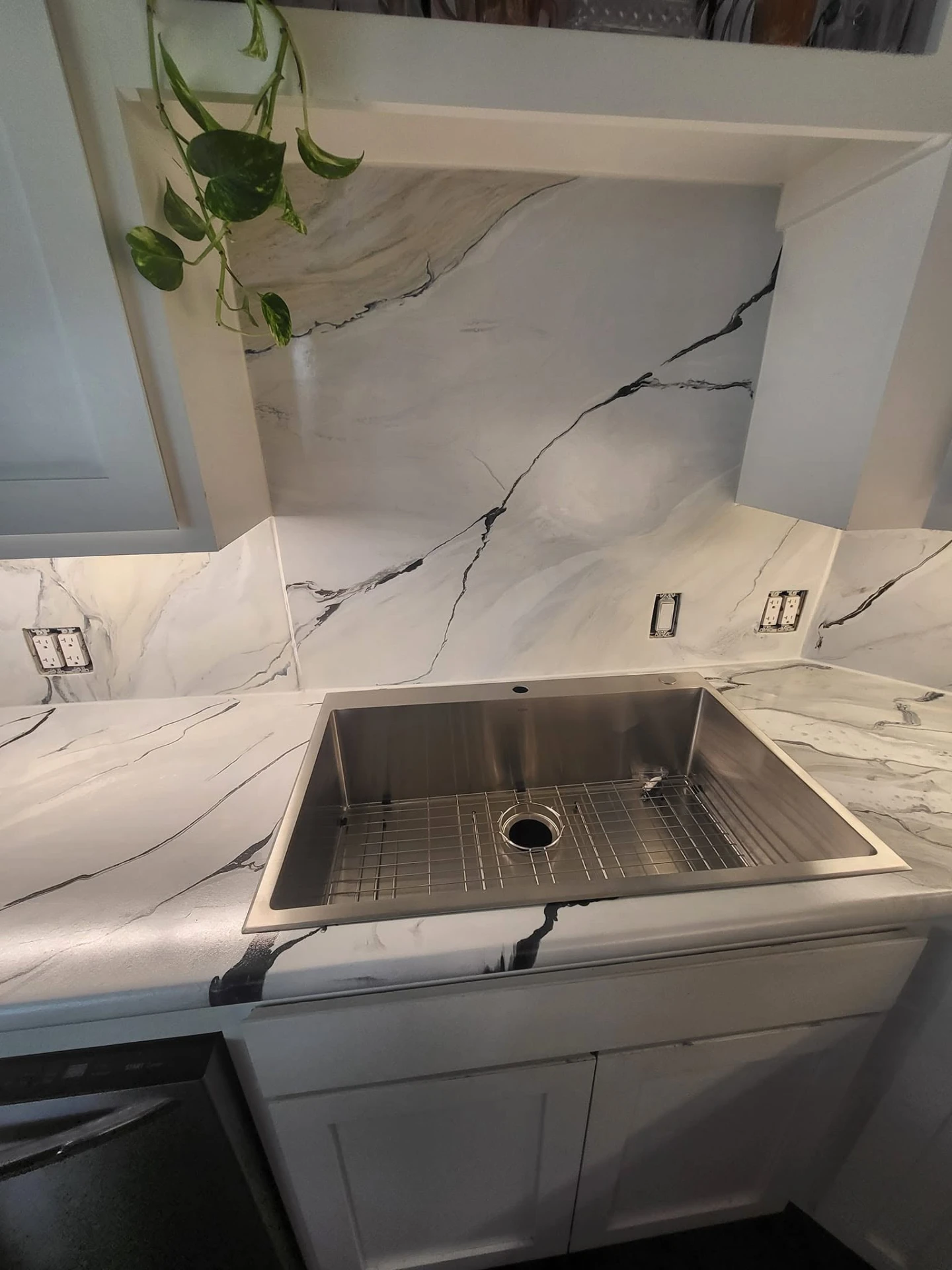
An epoxy countertop is a hand-poured resin surface applied directly on top of your existing counter. Instead of tearing out and replacing the slab, we bond a new seamless top over what you already have and hand-vein it to look like marble, granite or whatever pattern you pick. The finished surface is waterproof, non-porous and has no seams or grout lines.
Serving homeowners and businesses throughout Northwest Arkansas.
Who it's for
- Homeowners who want a stone look without slab-replacement cost or demolition
- Anyone with dated laminate, tile or solid-surface counters that are structurally sound
- Remodelers and designers who need a custom color or vein pattern matched to a room
- Rental and flip owners who need a fast, high-impact kitchen or bath upgrade
Surfaces we can pour over
- Laminate and post-form counters
- Tile counters (grout lines are filled and leveled first)
- Solid surface, cultured marble and Formica
- Butcher block and plywood substrates
- New MDF or plywood tops we build to your dimensions
What you get
- Seamless — no grout lines, no seams to trap crumbs or stain
- Waterproof and non-porous once cured, so it does not need annual sealing like natural stone
- Fully custom color and veining; you approve a sample before we pour your kitchen
- Works over your existing counters, so there is no demolition and no cabinet damage
- Repairable in place — a damaged section can be sanded and re-coated rather than replaced
Honest tradeoffs
- Epoxy is not a cutting board. Use a board; a knife will score the topcoat.
- It is heat resistant, not heat proof. Hot pans straight off the burner need a trivet.
- Every pour is hand-made, so the veining is one of a kind — it will not match a photo exactly.
- The counter has to be structurally sound. Rotted or crumbling substrate must be replaced first.
- Cure time is real. Counters take a few days before heavy daily use.
The work itself
HOW IT GETS DONE
Preparation
- 01Sinks, faucets and hardware are removed or masked, and the room is fully contained.
- 02The existing top is degreased, then sanded or ground so the primer has a mechanical bond.
- 03Seams, chips, grout lines and low spots are filled and leveled.
- 04Edges are built out or wrapped so the finished top has the profile you picked.
- 05Cabinets, floors and backsplashes are papered and taped before any resin is opened.
Installation
- 01A bonding primer or base coat goes down and is allowed to set.
- 02Base colors are poured and spread to an even film thickness.
- 03Veining is worked in by hand, wet, until the movement looks right to you.
- 04A clear topcoat is flood-poured and de-gassed to pull out bubbles.
- 05The surface cures undisturbed, then hardware and plumbing are reset.
Care and maintenance
- Daily: warm water and mild dish soap on a soft cloth.
- Skip abrasive powders, scouring pads, bleach and ammonia cleaners.
- Use cutting boards and trivets — always.
- Wipe spills reasonably promptly; the surface is non-porous but standing acids can dull gloss.
- Gloss can be refreshed years later with a re-coat instead of a replacement.
What makes this kind of work fail
- Skipped or rushed prep — resin poured over a greasy or glossy surface will eventually release.
- Pouring over a substrate that flexes or is water-damaged.
- Mixing resin off-ratio or in the wrong temperature range, which leaves soft or tacky spots.
- Putting the counter back into hard use before the topcoat has fully cured.
- Harsh chemical cleaners used over time, which haze the topcoat.
Questions we actually get
GOOD TO KNOW
- Can epoxy go over laminate countertops?
- Yes. Laminate is one of the most common substrates we pour over. It has to be sanded so the primer can grip, and any delaminating or swollen sections need repair first, but sound laminate takes epoxy well.
- Can epoxy cover tile countertops?
- Yes. Tile counters are filled and leveled so the grout lines disappear, then poured like any other top. Loose or hollow-sounding tiles are re-set or removed before we start.
- Do epoxy countertops scratch?
- They can. The topcoat is hard but not diamond-hard, so cutting directly on the surface will leave marks. Use a cutting board. Light scratches can usually be buffed or re-coated in place.
- Is epoxy heat resistant?
- It resists everyday heat — a warm mug, a hot plate from the microwave. It is not heat proof. A pan straight off the stove or out of the oven needs a trivet.
- How do you clean epoxy countertops?
- Mild dish soap and warm water. Avoid abrasive powders, scrub pads, bleach and ammonia-based cleaners, which dull the gloss over time.
- Can epoxy look like marble or stone?
- That is most of what we pour. Veining is worked by hand while the resin is wet, so we can match a slab photo you like, a tile in the room, or design something original with you.
Related
READY FOR A REAL NUMBER?
Send photos and rough measurements and we'll walk you through colors, timeline and pricing for your space.
Northwest Arkansas · Mon–Sat, 8am–6pm