- What is the best flooring for a garage gym?
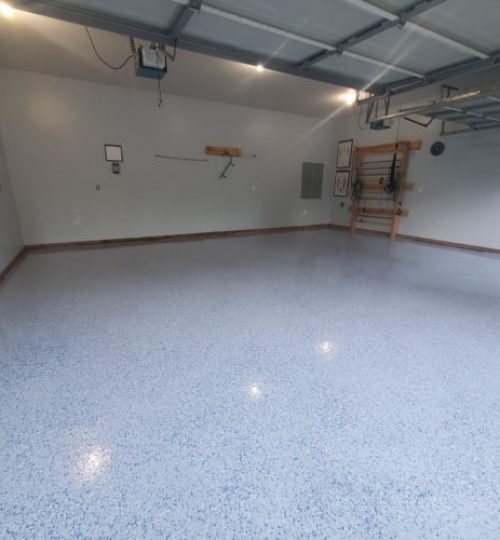
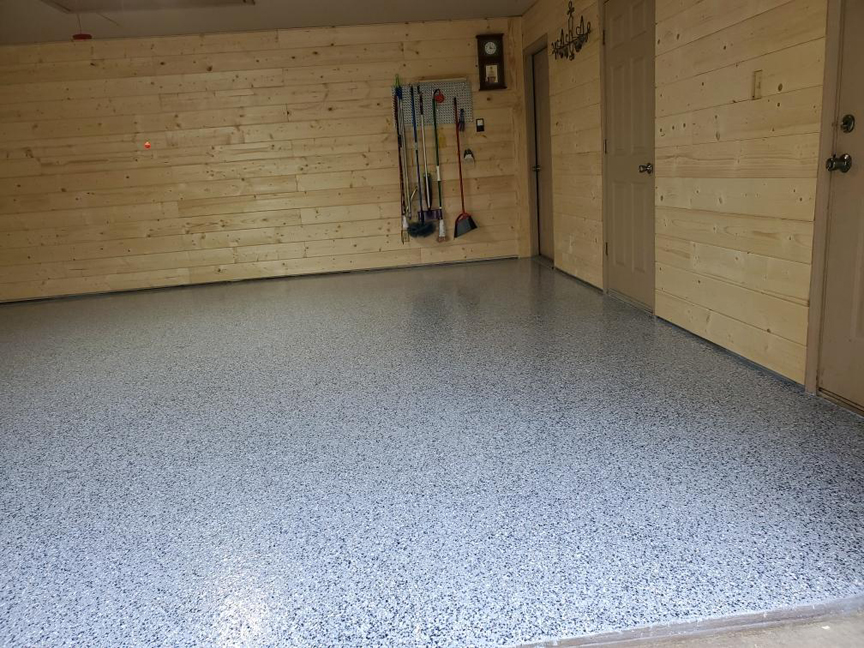
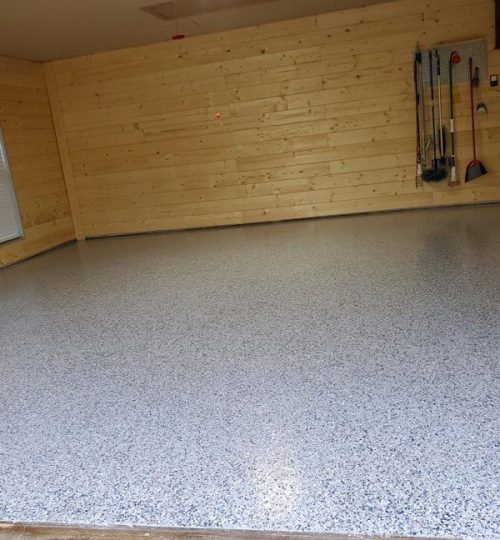
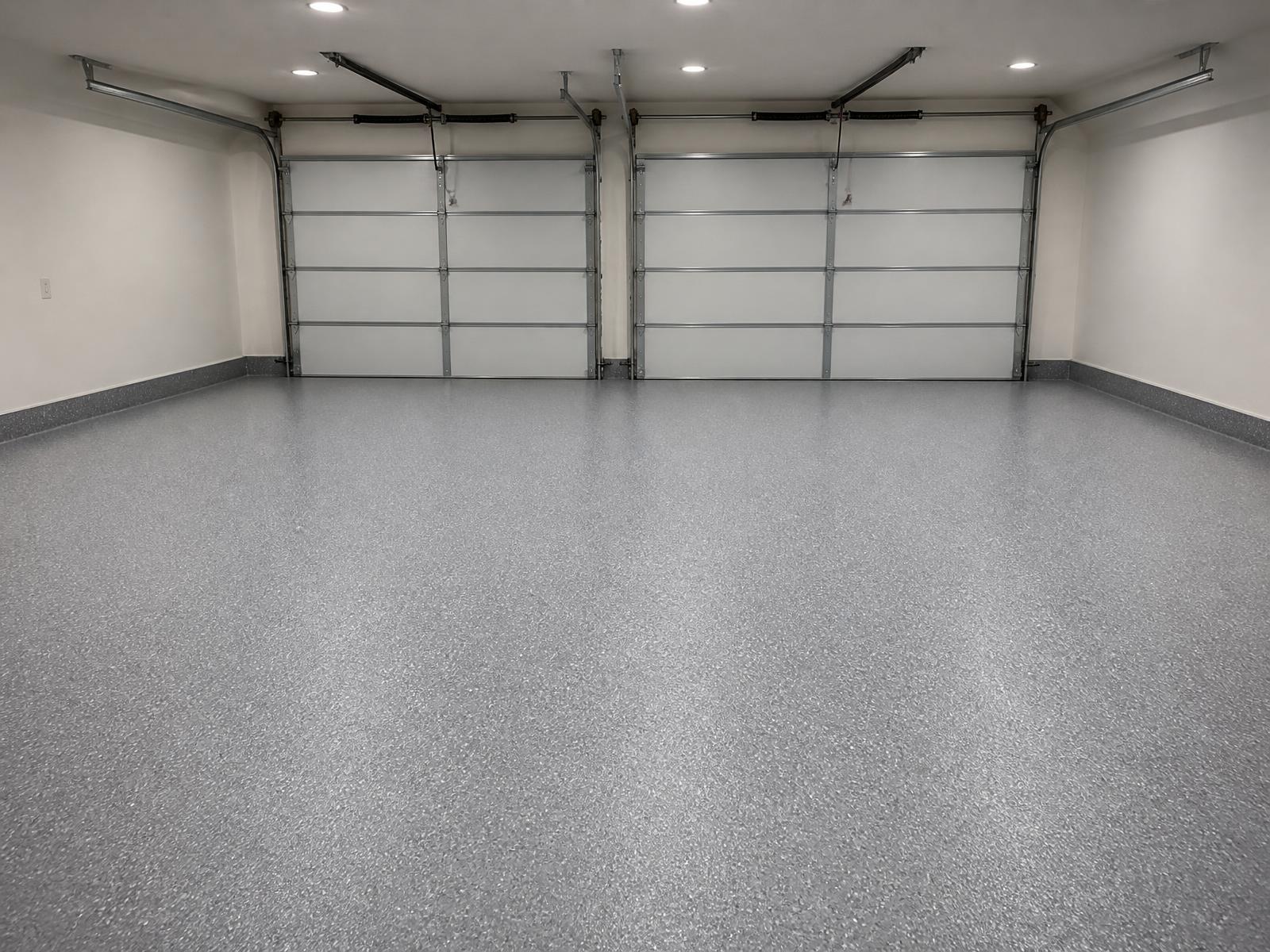
- A coated slab for the whole floor plus rubber in the impact zones. The coating handles sweat, dust and humidity; the rubber handles dropped weight.
- Is epoxy good for a home gym?
- Yes, as the foundation. It's moisture resistant, wipes clean, and stops concrete dust. It is not impact absorption — add rubber under racks and platforms.
- Will weights crack an epoxy floor?
- Dropped bumpers or plates can chip any rigid surface, coated or bare. Rubber in the drop zone prevents it, and chips can be patched and re-coated in place.
- Do I need rubber flooring over epoxy?
- Only where iron lands — under the squat rack, bench and deadlift area. The rest of the floor is better left coated and easy to clean.
- Can rubber mats stain an epoxy floor?
- Low-quality recycled rubber can leave a haze under heat. Choose mats with a non-migrating backing and lift them occasionally to clean underneath.
- What's the best floor for deadlifting in a garage?
- A coated slab with a dedicated platform or 3/4" stall mats over it. That protects both the coating and the concrete, and keeps noise down.
- How do I make a garage gym easier to clean?
- Seal the slab. Bare concrete holds sweat, chalk and dust permanently. A coated floor takes a dust mop and a damp towel.
- Rubber rolls or rubber tiles?
- Rolls give fewer seams for a full-room gym; tiles are easier to install alone and let you armor only the zones that need it over a coated floor.
- Best garage gym flooring for sweat and humidity?
- A coated floor with an anti-slip additive in the topcoat. It doesn't absorb moisture, and it doesn't get dangerous when it gets damp.