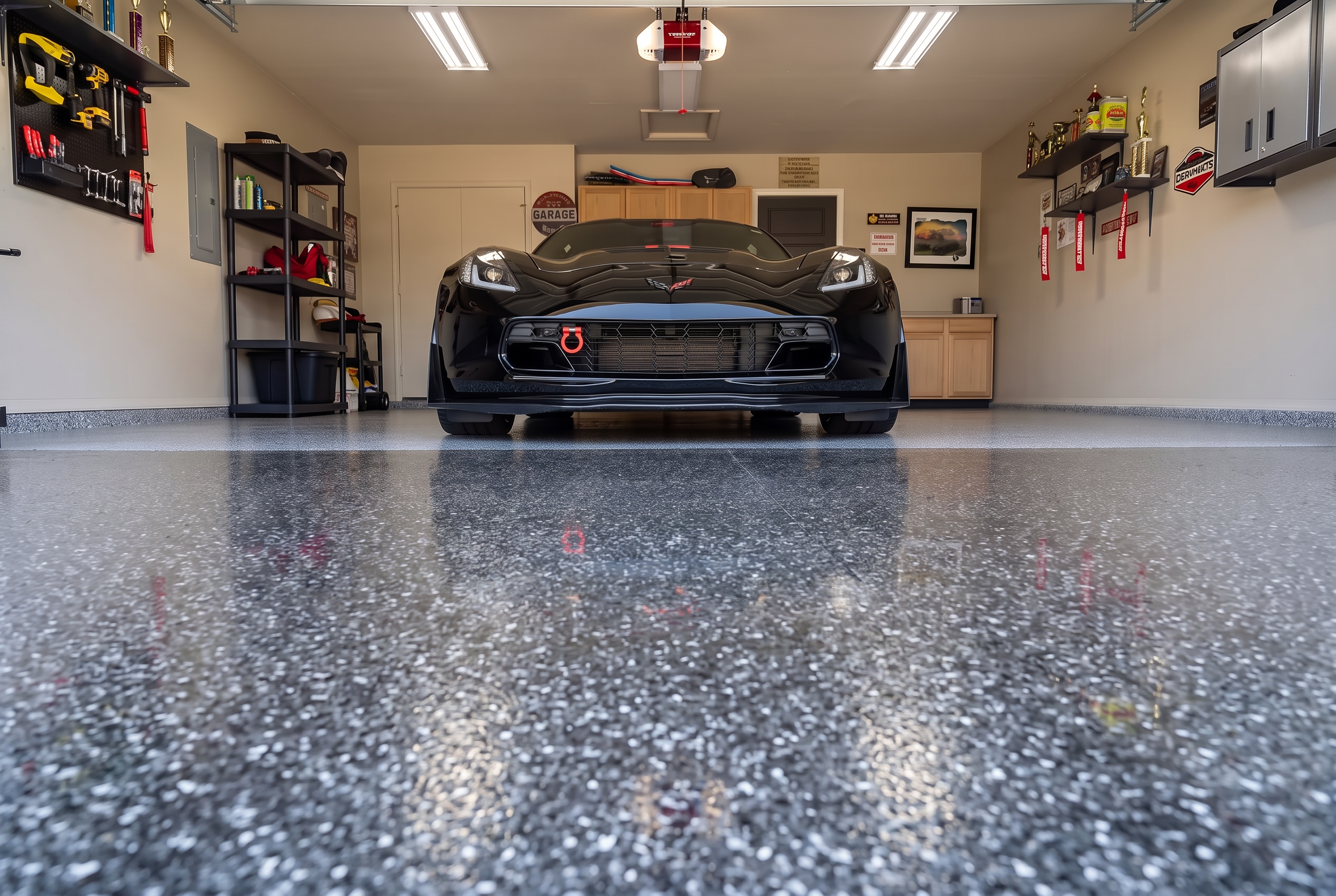
How should I redo my garage floor?
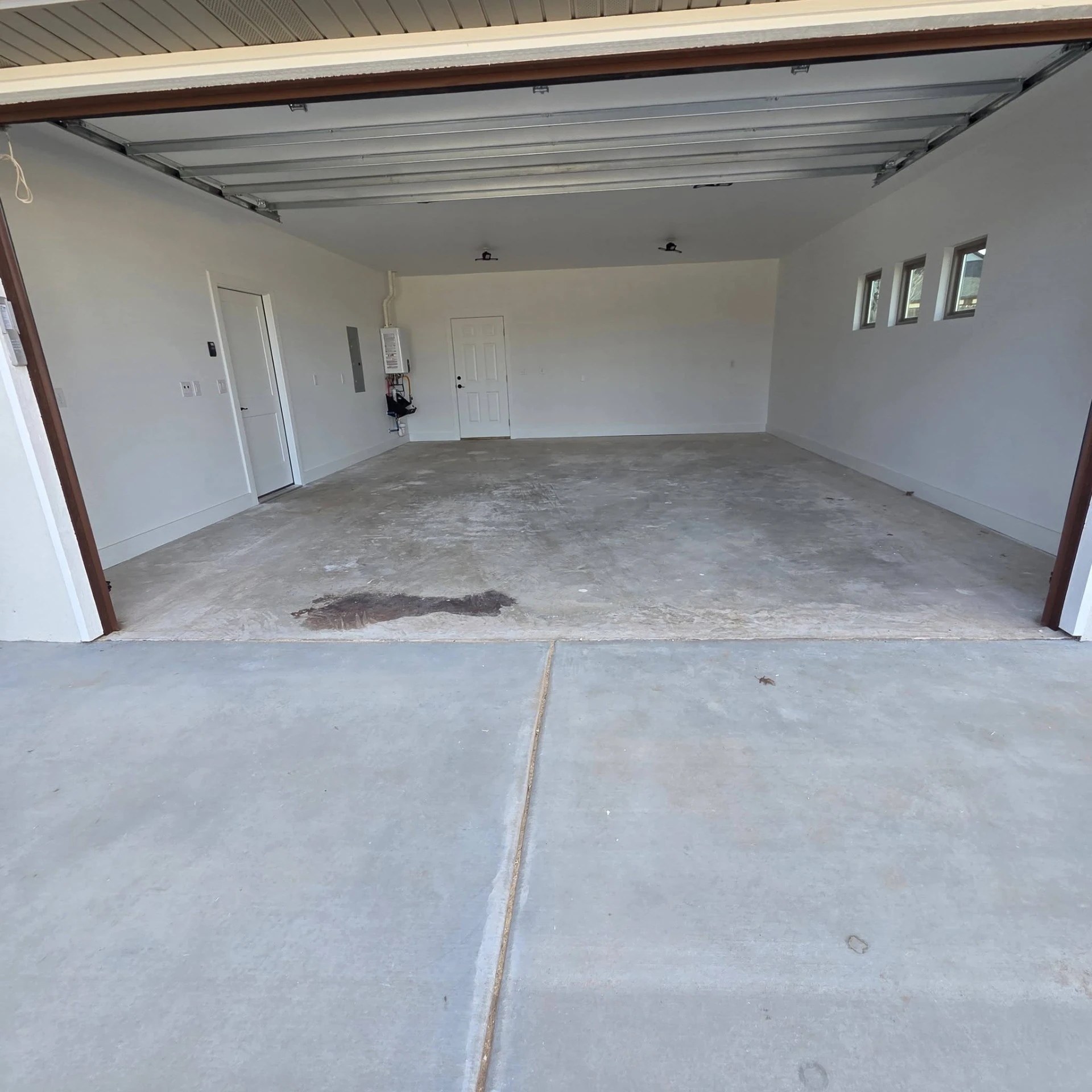
Redo it in this order: fix the concrete, mechanically grind it, then coat it. A garage floor that lasts is diamond-ground down to clean, open concrete, patched where it is cracked or spalled, primed, given a color or flake broadcast layer, and sealed with a polyaspartic topcoat. Skipping the grinding step is the single most common reason a redone garage floor peels within a year — no cleaner, etcher or roll-on kit substitutes for it.
What is the best stuff to use on a garage floor?
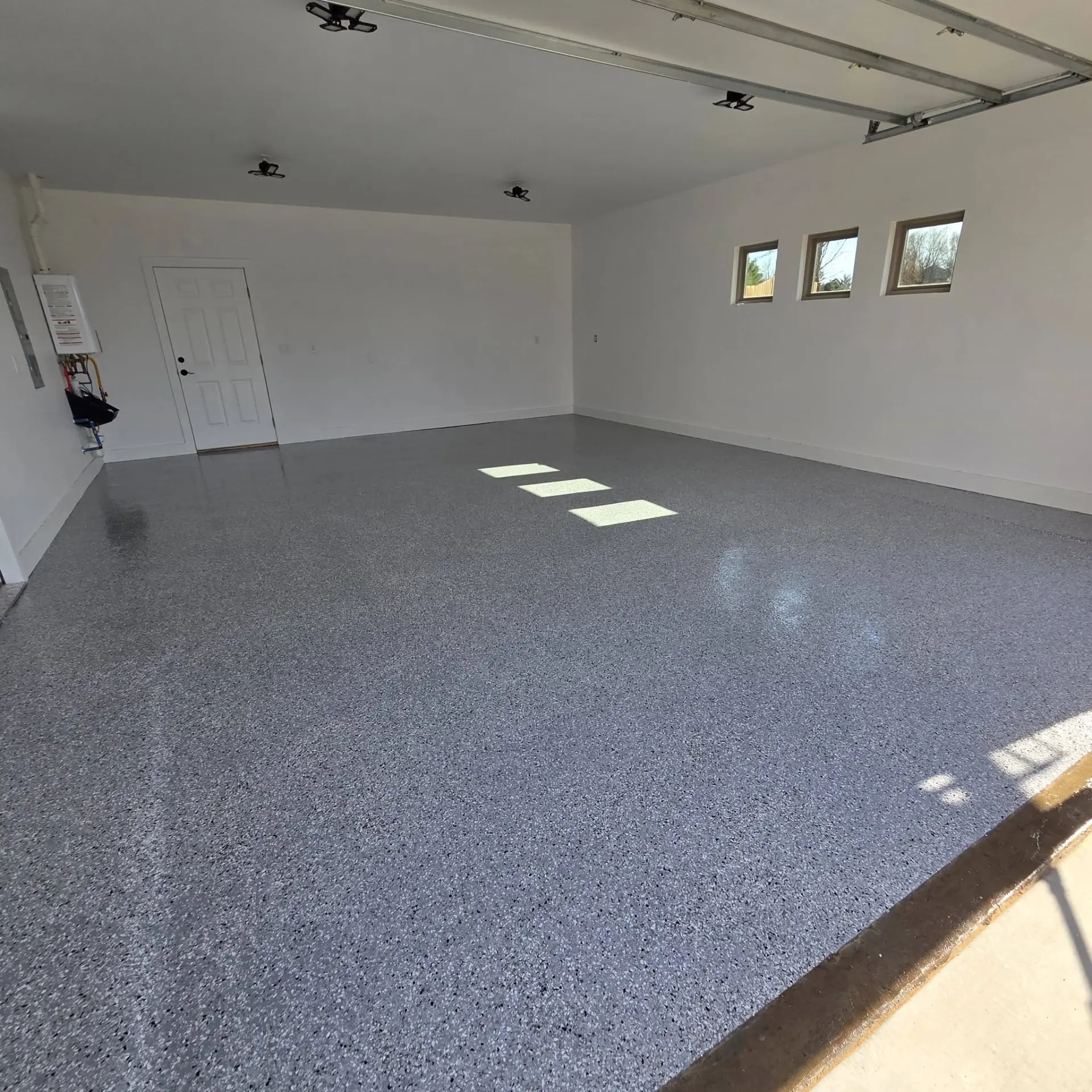
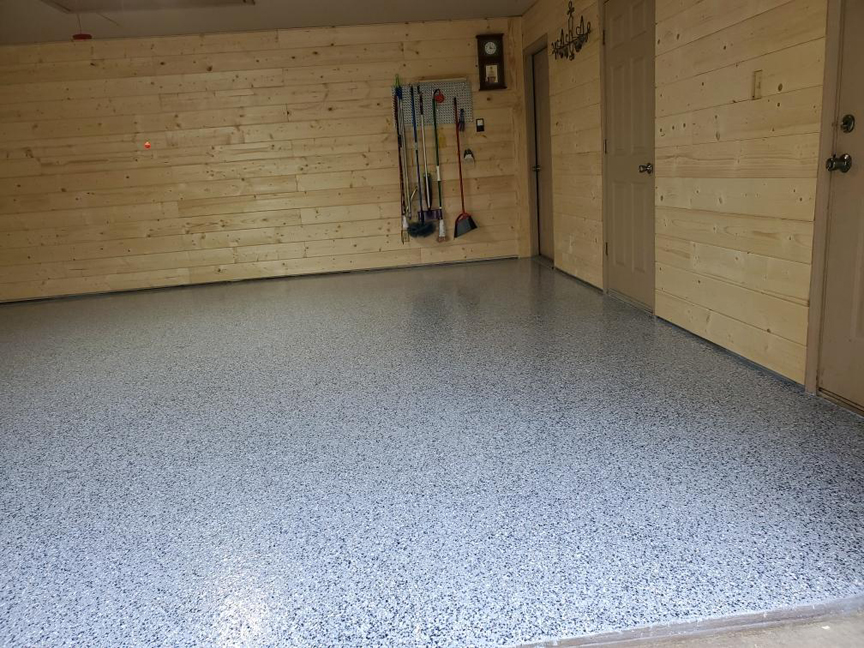
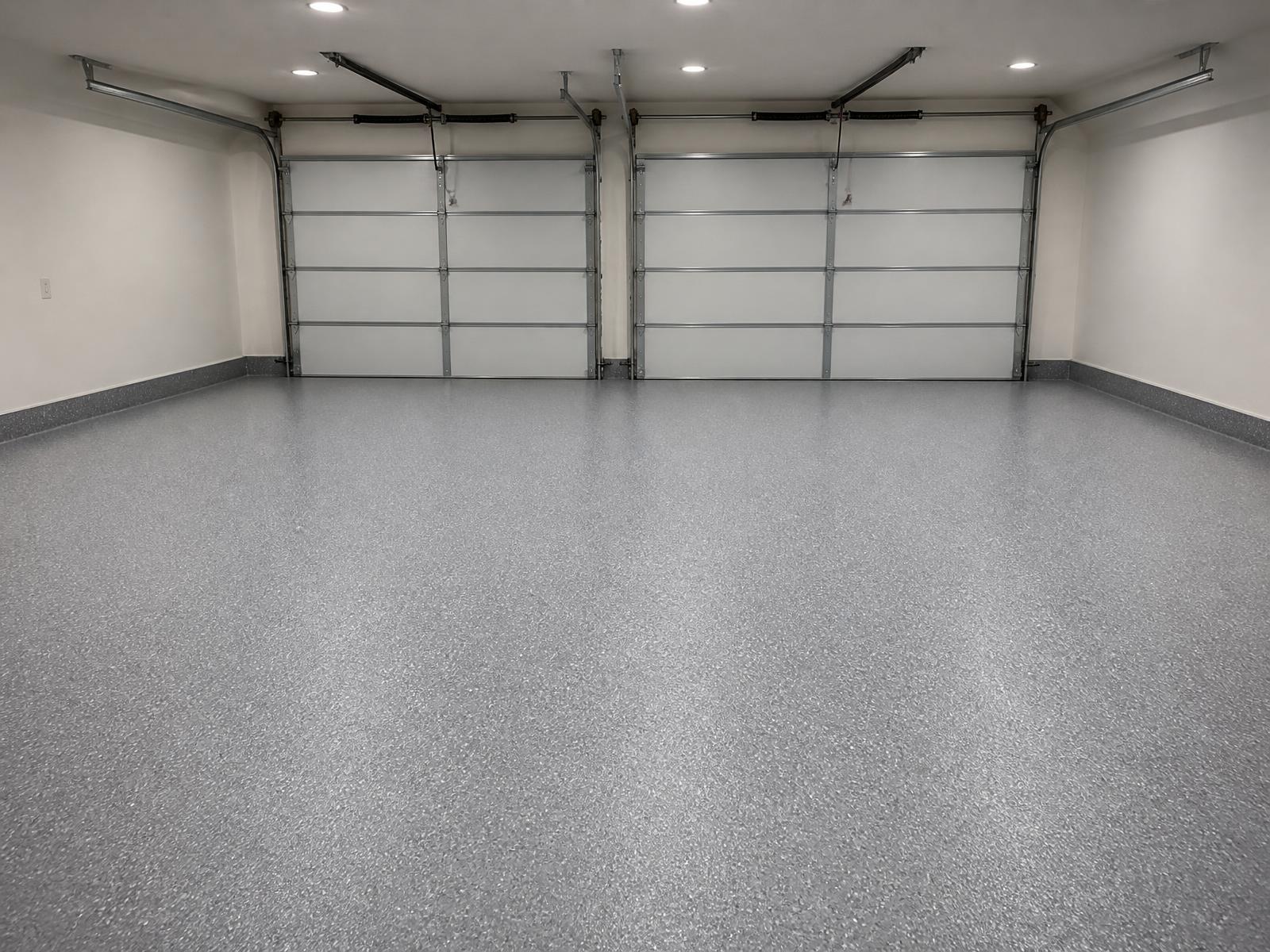
The best system for a home garage is a diamond-ground, 100% solids epoxy base with a full flake broadcast and a polyaspartic topcoat. Epoxy gives you bond and body, the flake gives you texture and hides dust and tire marks, and the polyaspartic resists hot tires, UV yellowing, salt and dropped tools. Garage floor paint, one-part 'epoxy' kits from a big-box store and acrylic sealers all sit on top of the concrete instead of keying into it, which is why they lift.
I want a fancy garage floor — what are my options?
For a high-end garage you have three real looks: full flake in a custom color blend, metallic epoxy with pearlescent movement, or a marble-look pour with hand-drawn veining. Flake reads clean and showroom-like and is the most forgiving underfoot. Metallic looks like liquid stone or brushed steel and is dramatic under lights. Marble-look is the loudest and best in a display bay. Any of them can be paired with a satin or mirror-gloss topcoat, custom border lines, or a color matched to a car.
What floor should I put in a garage where I park a Corvette?
For a collector or performance car, use a flake or metallic system with a high-gloss polyaspartic topcoat and a hot-tire-rated build. Hot tires are the real enemy in a Corvette garage: performance tires run soft and hot, and they will plasticize and lift a thin coating right where you park. A properly ground, high-build system with a polyaspartic top does not pick up tire marks, does not stain from brake dust or fluid, and reflects light so the car looks good sitting still. Gloss also makes wash-down and detailing easier.
How much does it cost to epoxy a two-car garage?
Cost depends on square footage, slab condition and the system you choose — a solid color is the low end and a metallic or marble-look pour is the high end. Prep drives more of the price than most people expect: an oil-soaked slab with cracks and an old peeling coating takes far more labor than a clean new build. We quote after seeing the space or clear photos of it, and the quote spells out prep, coats and topcoat so you can compare it apples-to-apples.
Is epoxy or polyaspartic better for a garage floor?
Use both — they are layers, not competitors. Epoxy is the thick, high-build base that bonds to the ground concrete and levels it. Polyaspartic cures fast, resists UV yellowing and abrasion, and belongs on top. A system marketed as 'polyaspartic only' is usually thinner than an epoxy-plus-polyaspartic build; a system marketed as 'epoxy only' can amber in sunlight and scratch easier.
How long does a garage floor coating last?
A properly ground and topcoated flake system in a residential garage is a long-term floor, not a seasonal one, and the topcoat can be refreshed later without redoing the whole system. Longevity comes down to prep and film build, not brand: coatings fail early because of bad bond or slab moisture, almost never because the resin wore out.
Can you epoxy a garage floor that already has a peeling coating?
Yes. The old coating is mechanically removed by grinding, the slab is checked for moisture, and repairs are made before anything new goes down. Coating over a failing finish just transfers the failure to the new floor, so it always comes off first.
Will a coated garage floor be slippery?
A full flake system is not slick, because the flake creates surface texture even under gloss. A mirror-gloss metallic with no additive can be slick when wet, so we add a slip-resistant additive to the topcoat when the garage sees rain, snowmelt or a hose.
How long before I can park on a new epoxy garage floor?
Foot traffic comes back first, vehicles later — the topcoat needs to reach full cure before tires sit on it. Exact timing depends on the product and the weather that week, so we give you dated milestones for your floor at the estimate instead of a generic number.
Do garage floor coatings work in Arkansas humidity and temperature swings?
Yes, when moisture is tested first. Northwest Arkansas slabs can push vapor up from below, especially in older homes and below-grade garages, and that vapor is what delaminates a coating. We test, and where needed use a moisture-tolerant primer. Temperature is handled by scheduling installs inside the product's working range.
Is a DIY garage floor kit worth it?
For most garages, no. Big-box kits are thin, water-based, and instruct you to acid-etch instead of grind — that combination is why so many DIY floors peel in sheets under hot tires within a season or two. If you do want to DIY, rent a diamond grinder and buy a 100% solids system; the coating cost is small next to the labor you are about to spend.