Garages & shops
GARAGE FLOOR EPOXY & CONCRETE COATINGS
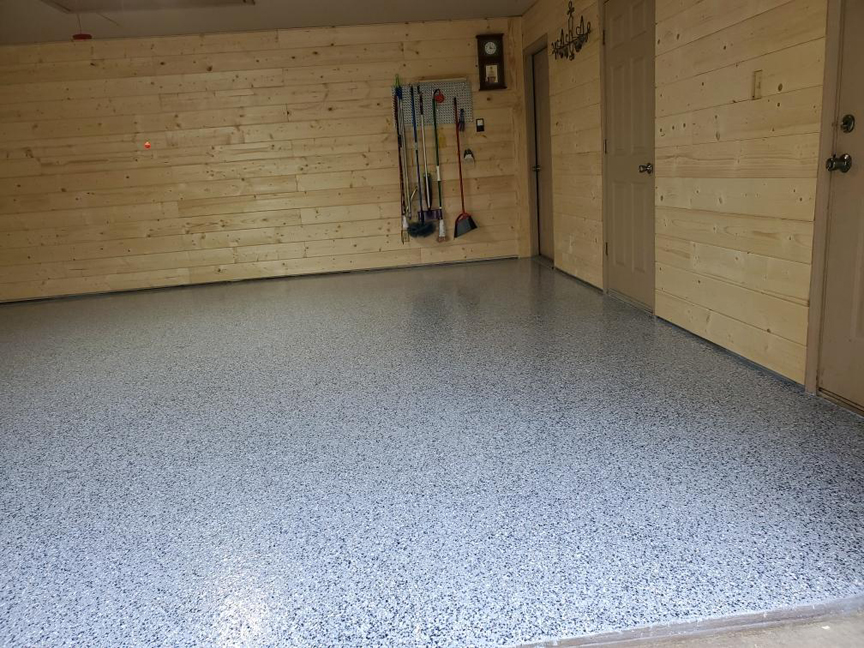
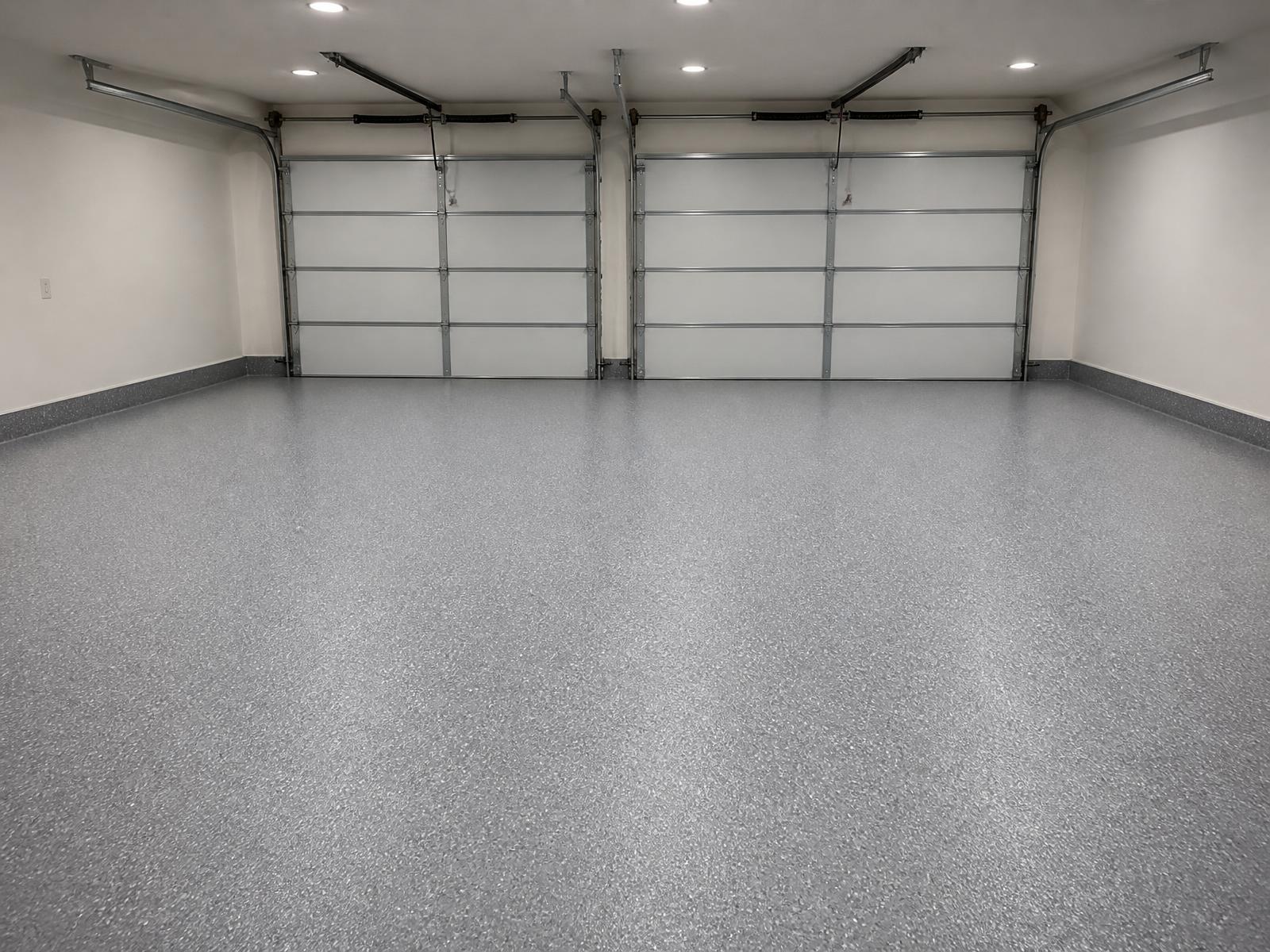
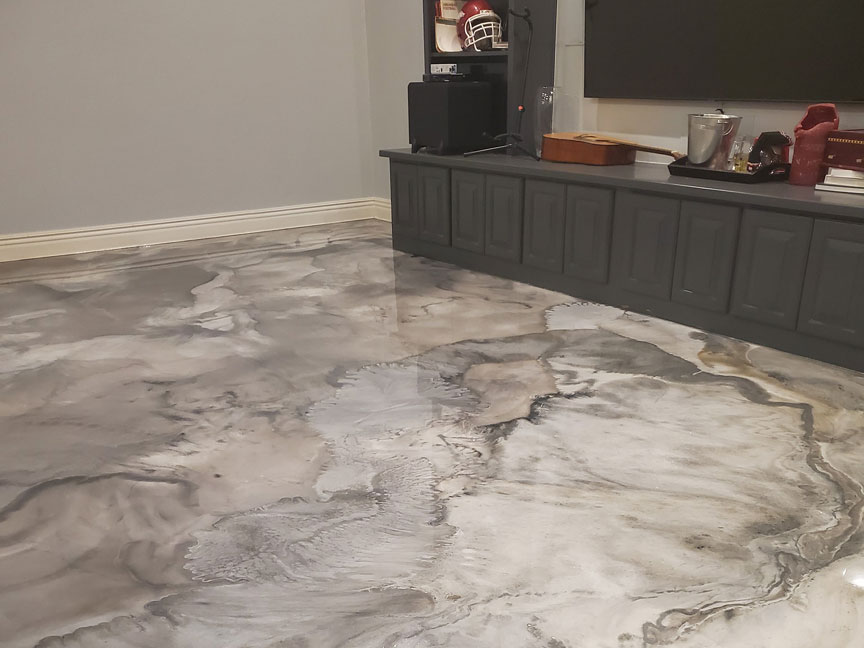
A garage floor coating is a bonded resin system installed over your concrete slab — typically a ground and primed base, a color or flake broadcast layer, and a hard clear topcoat. Done correctly it stops concrete dusting, resists hot tires, and turns a slab that soaks up every oil drip into a surface you can mop.
Serving homeowners and businesses throughout Northwest Arkansas.
Who it's for
- Homeowners tired of concrete dust, oil stains and a slab that never looks clean
- Shops, workspaces and home gyms that need a durable, wipeable floor
- New builds where the slab is bare and ready to be protected
- Anyone whose previous coating or big-box DIY kit peeled
Surfaces we can pour over
- Bare concrete garage and shop slabs
- Slabs with old coatings that can be mechanically removed
- Basements and utility rooms
- Concrete with minor cracks and spalling, after repair
What you get
- Diamond-ground prep instead of acid etch, which is the difference between bonding and peeling
- Hot-tire-resistant topcoat — tires do not lift the finish
- Oil, salt, de-icer and dropped-tool resistant
- Flake systems add texture, so the floor is less slick when wet
- Brightens the space dramatically; light bounces instead of being absorbed by gray concrete
Honest tradeoffs
- Concrete with active moisture coming up through the slab needs to be tested and addressed first.
- Structural cracks and heaving are a concrete problem, not a coating problem.
- Full-gloss coatings without flake or grit are slick when wet — pick texture if that matters.
- The garage has to be emptied and stays off limits during install and cure.
- Some UV yellowing is possible on epoxy in direct sunlight; topcoat choice matters here.
The work itself
HOW IT GETS DONE
Preparation
- 01The slab is emptied and swept, and oil spots are degreased and treated.
- 02The concrete is diamond-ground to open the pores — we do not rely on acid etch.
- 03Cracks, pits and spalled areas are repaired and ground flush.
- 04Control joints are treated according to how you want them to read in the finish.
- 05Dust is vacuumed off so the primer meets clean, open concrete.
Installation
- 01A penetrating primer or base coat is rolled into the ground slab.
- 02Color base goes down, or flake is broadcast to refusal into the wet base.
- 03Excess flake is scraped and vacuumed, then the surface is knocked down smooth.
- 04One or more clear topcoats are applied to build wear thickness.
- 05The floor cures before foot traffic, and longer before vehicles.
Care and maintenance
- Dust mop or blow it out; mop with a neutral cleaner and warm water.
- Wipe oil, brake fluid and battery acid rather than letting them sit.
- Rinse road salt off in winter.
- Use plywood or a mat under jack stands and heavy point loads.
- Avoid dragging steel edges and metal-wheeled equipment across the finish.
What makes this kind of work fail
- Acid etch or no prep at all — the number-one reason coatings peel in sheets.
- Moisture vapor pushing up through a slab that was never tested.
- Hot tires lifting a thin, single-coat DIY kit.
- Coating over old sealer, curing compound or a previous failing finish.
- Applying in temperatures outside the product's range, which leaves the film soft.
Questions we actually get
GOOD TO KNOW
- Why do garage floor coatings peel?
- Almost always prep. If the slab was acid-etched or just cleaned instead of mechanically ground, the coating sits on the surface rather than keying into it, and hot tires or moisture lift it. Untested moisture vapor coming up through the slab is the other common cause.
- What is the difference between epoxy and polyaspartic?
- Epoxy is the thicker, high-build layer that bonds to and levels the concrete. Polyaspartic is a fast-curing topcoat that is more UV stable and more abrasion resistant. Many good systems use both — epoxy underneath for build and bond, polyaspartic on top for wear and color stability.
- How long does an epoxy garage floor take?
- It is a multi-day process: prep and repair, base, flake or color, then topcoat, with cure time between steps and before vehicles return. The exact schedule depends on slab condition, size and weather, so we give you dates for your specific floor at the estimate.
- Can cracked concrete be repaired before coating?
- Yes — cracks, pits and spalled areas are routinely repaired and ground flush as part of prep. What a coating cannot fix is an actively moving or heaving slab; that is a concrete repair conversation first.
- Is a coated garage floor slippery?
- A high-gloss coating with no texture is slick when wet. Flake systems and added grit give the surface texture, which is why we recommend them for garages that see rain, snowmelt or a hose.
Related
READY FOR A REAL NUMBER?
Send photos and rough measurements and we'll walk you through colors, timeline and pricing for your space.
Northwest Arkansas · Mon–Sat, 8am–6pm